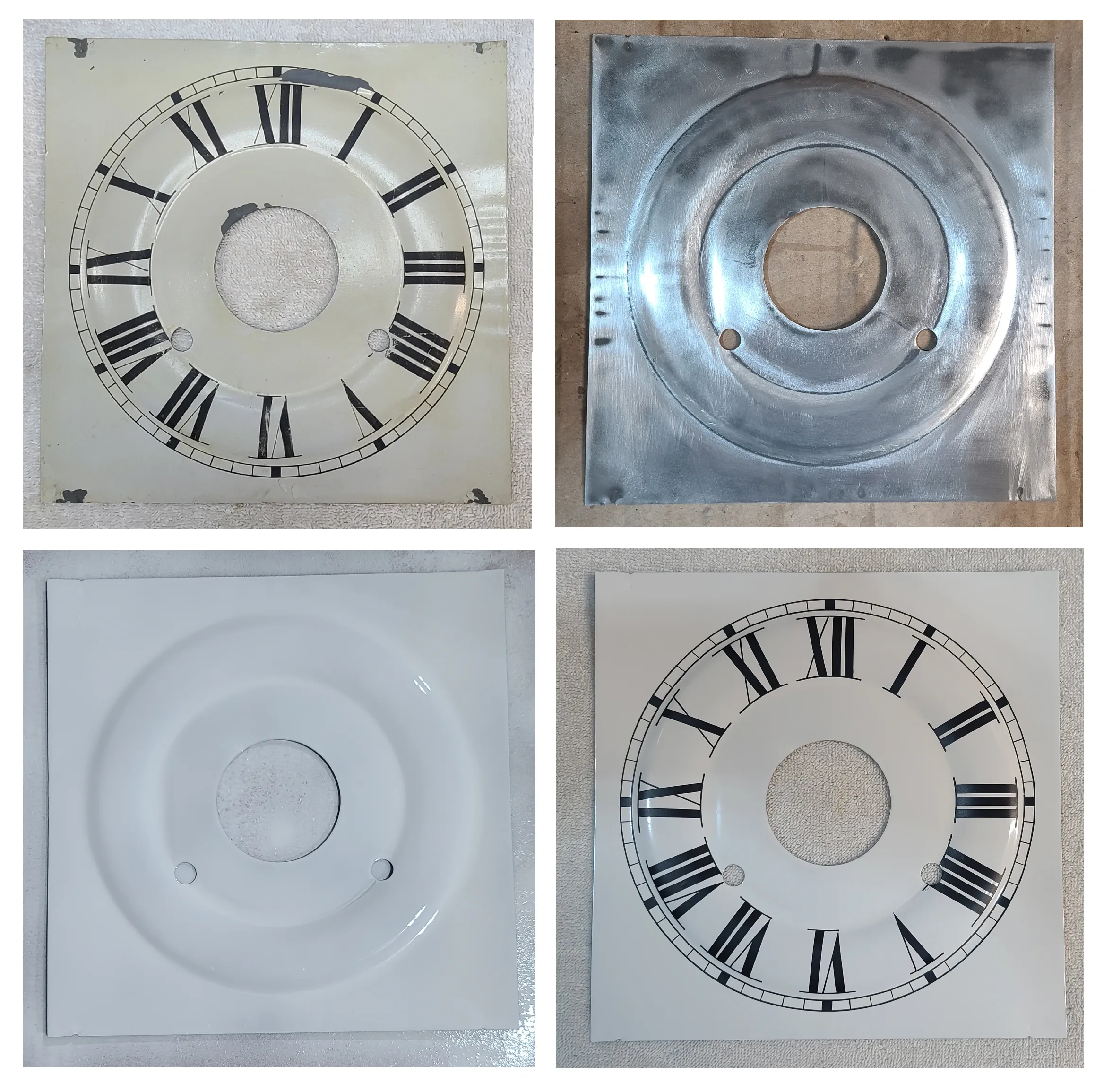
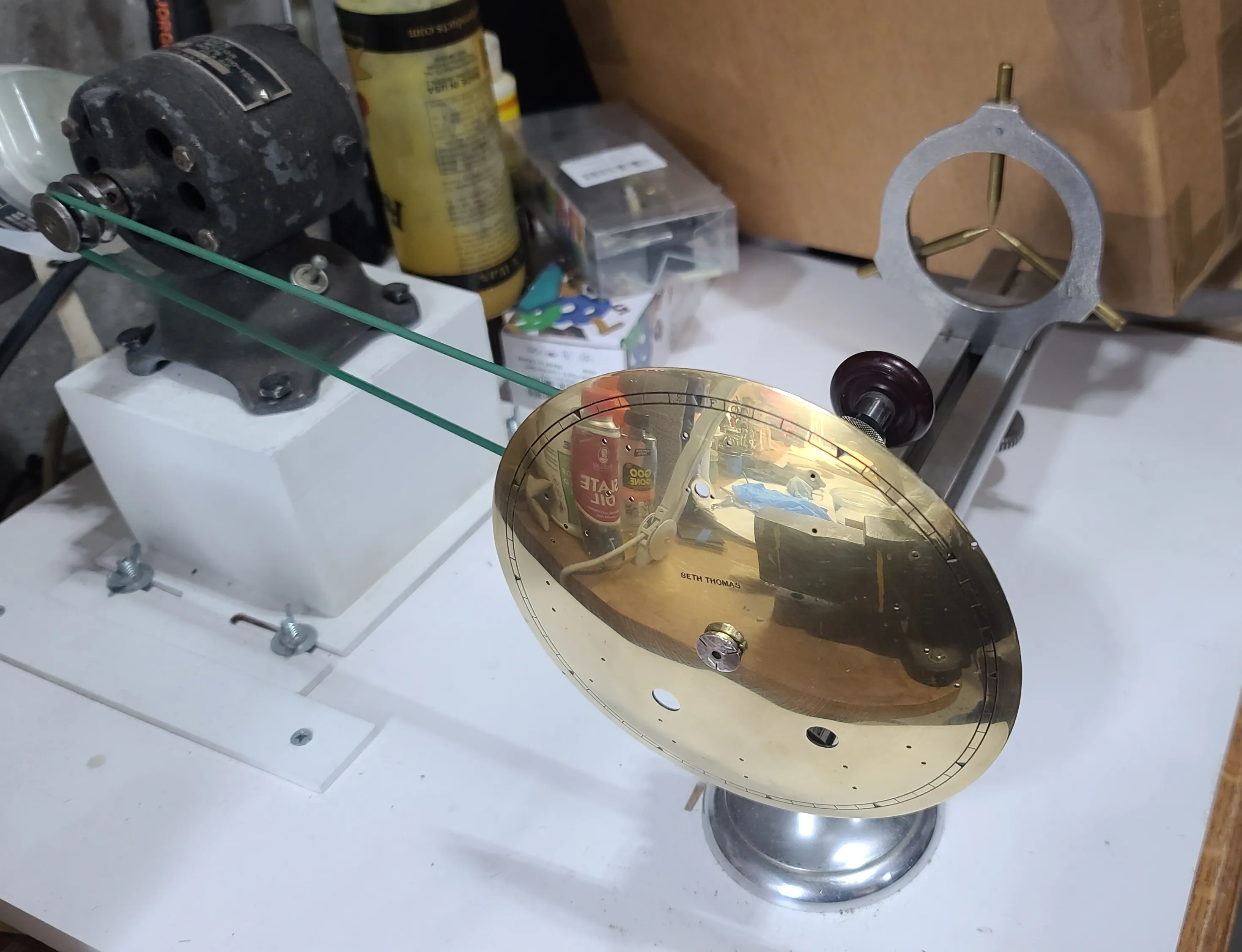
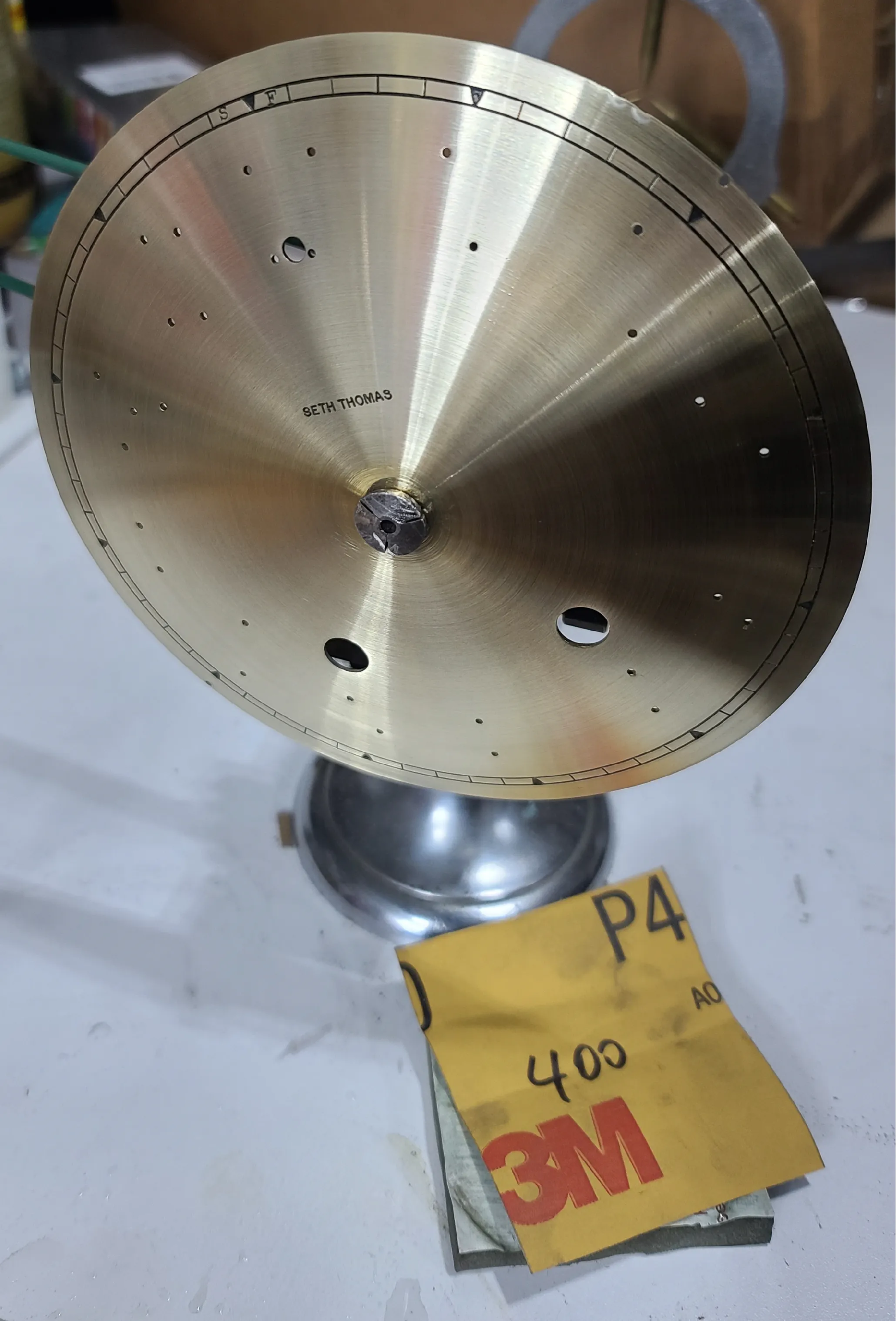
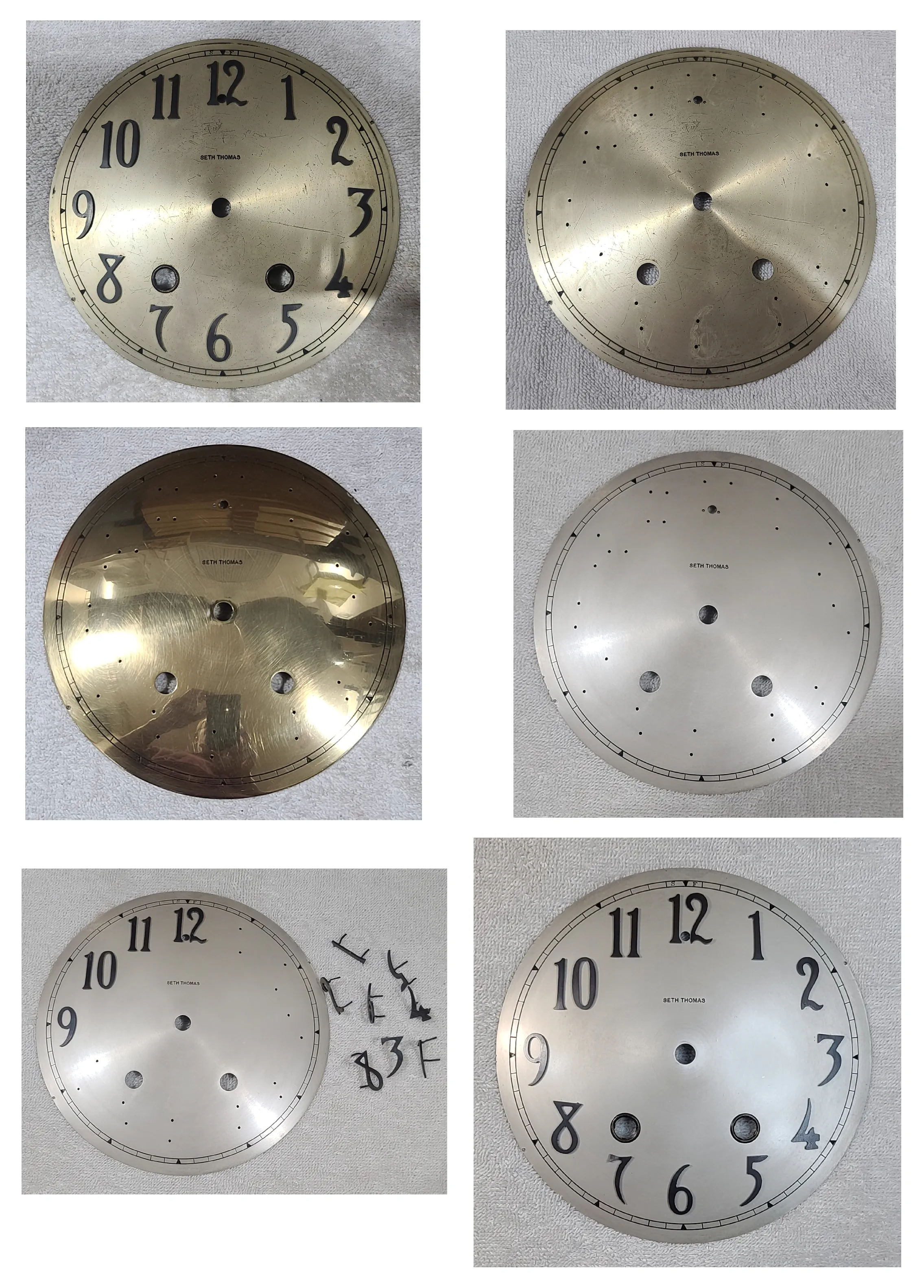
We can return your dial to the condition that attracted your ancestors to your clock when they purchased it at the turn of the century.
- RESTORATION STORY -
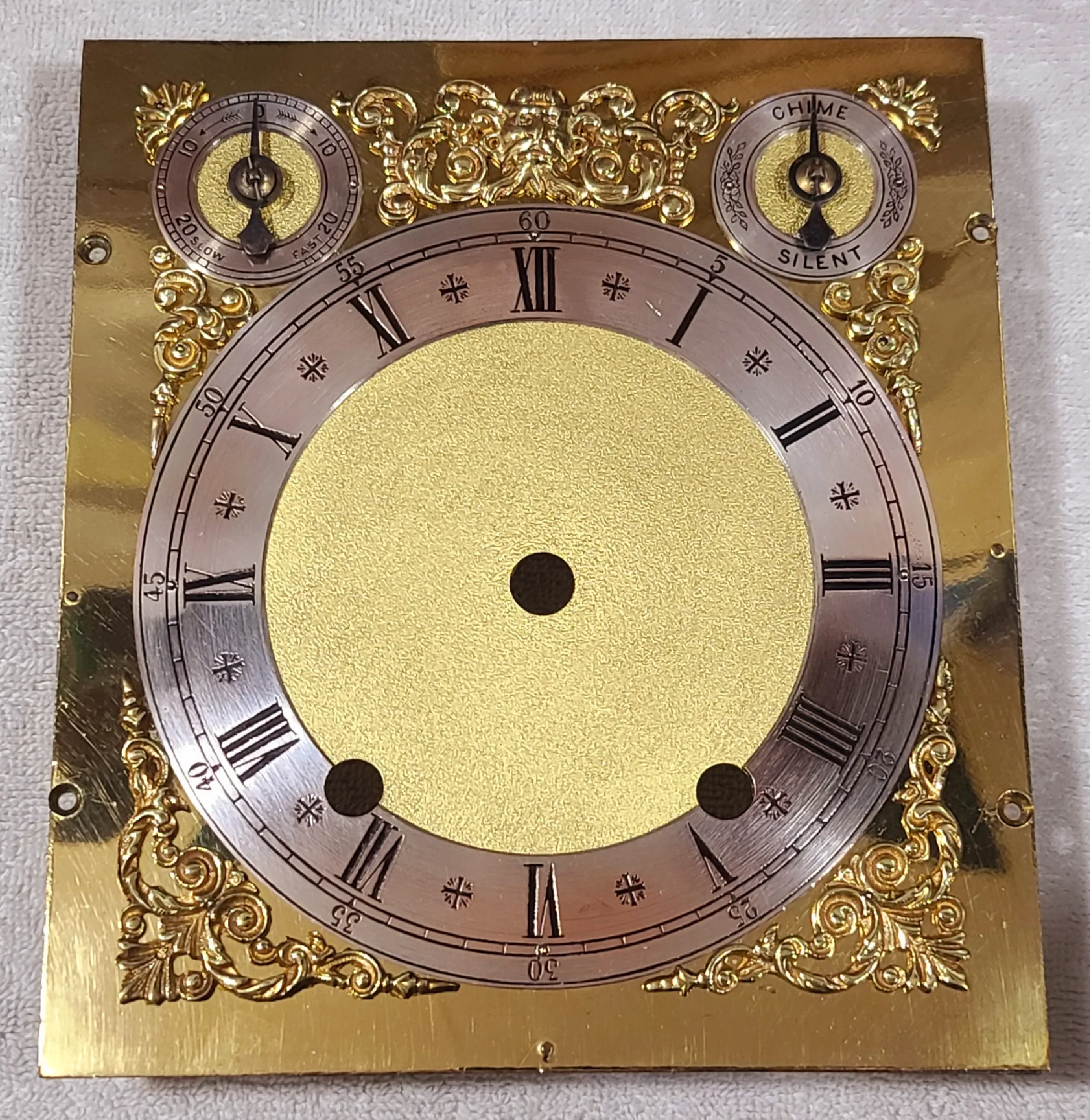
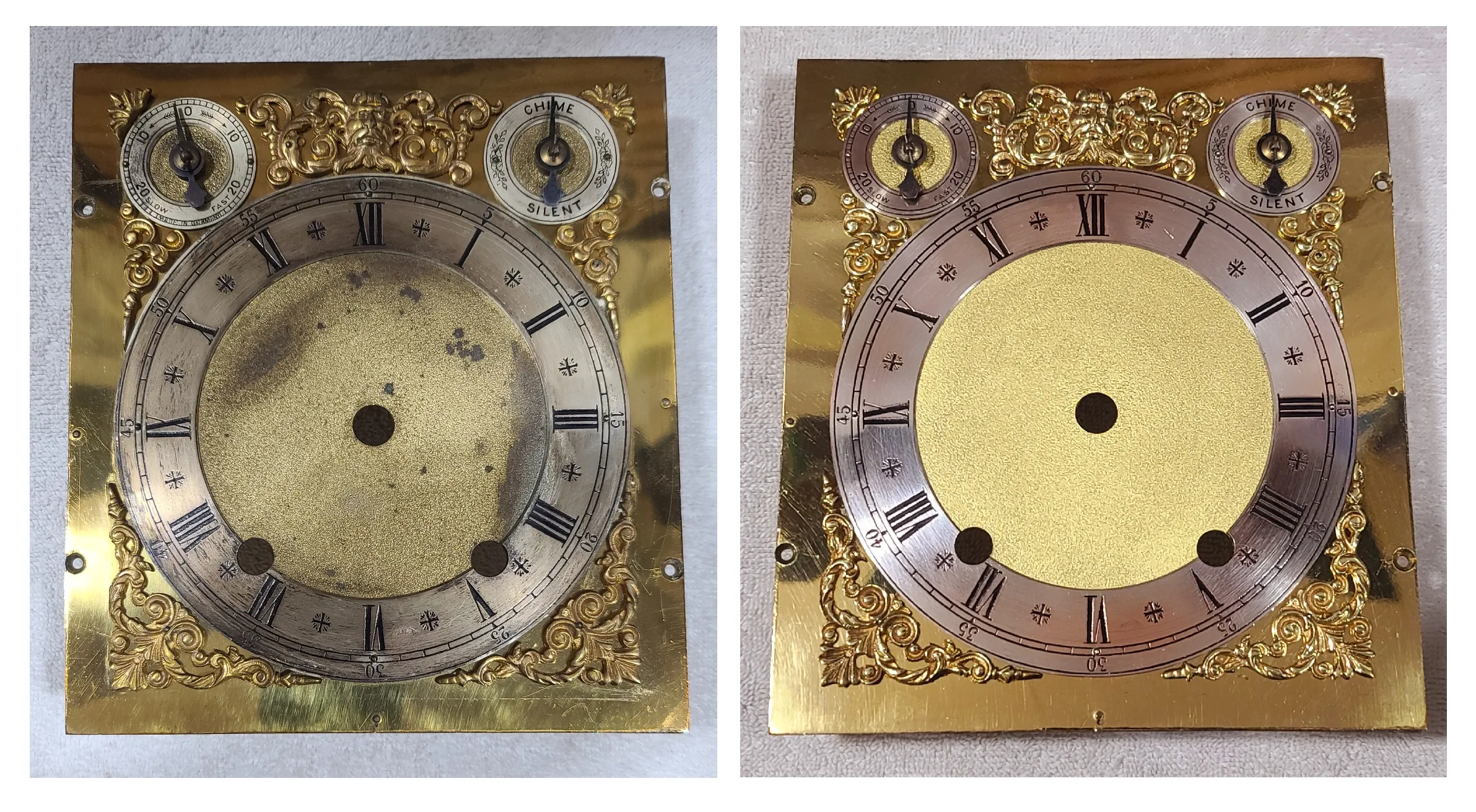
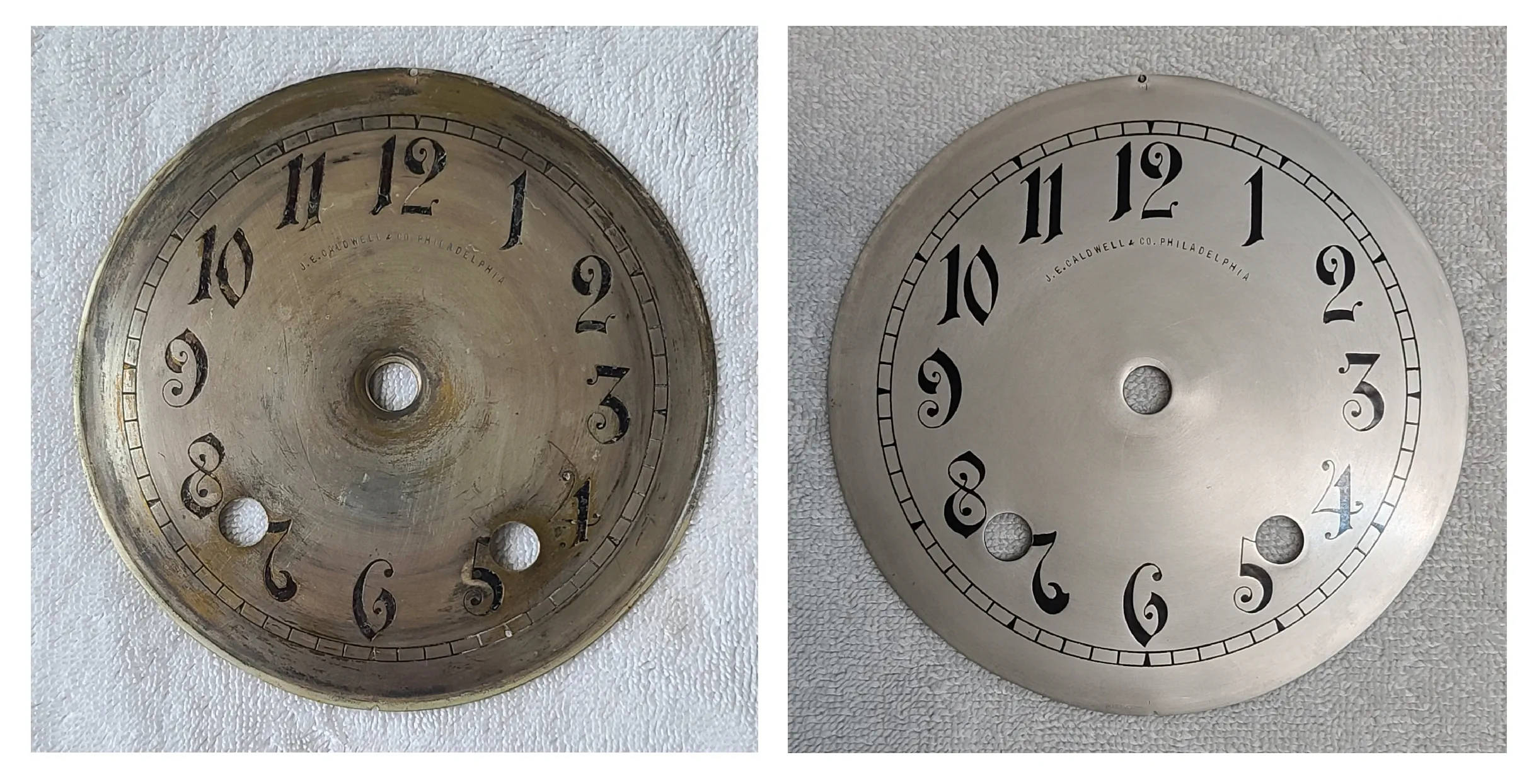
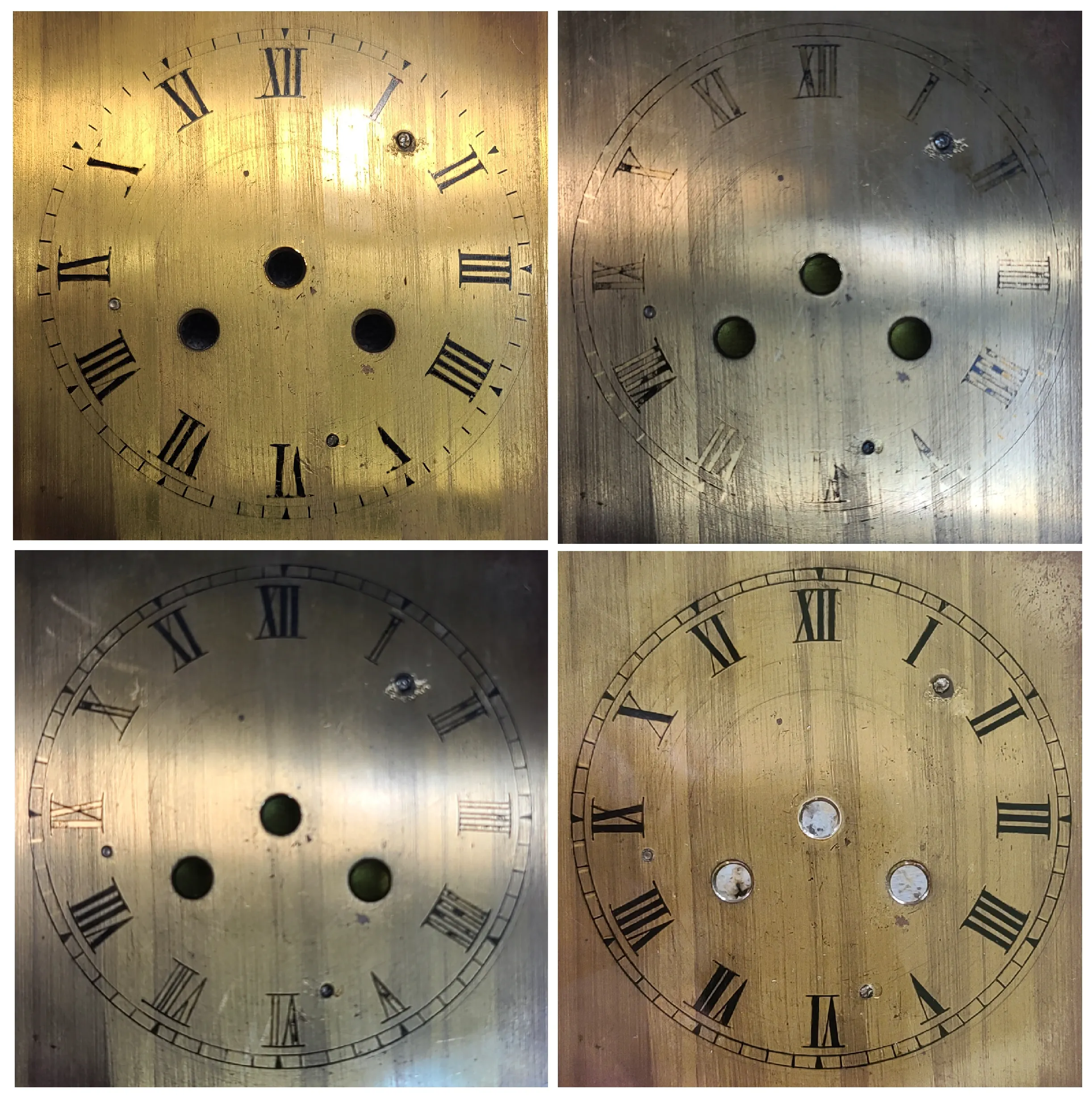
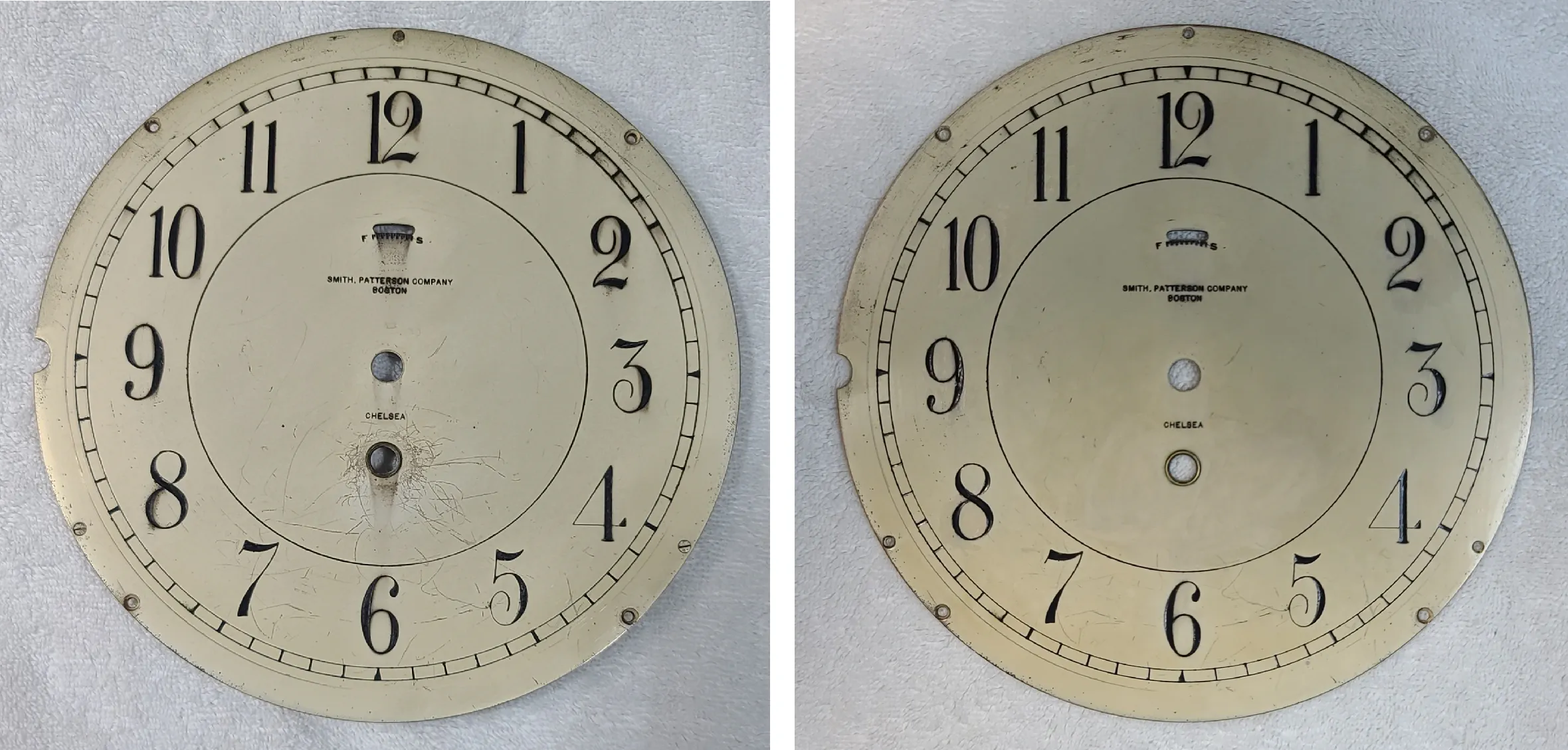
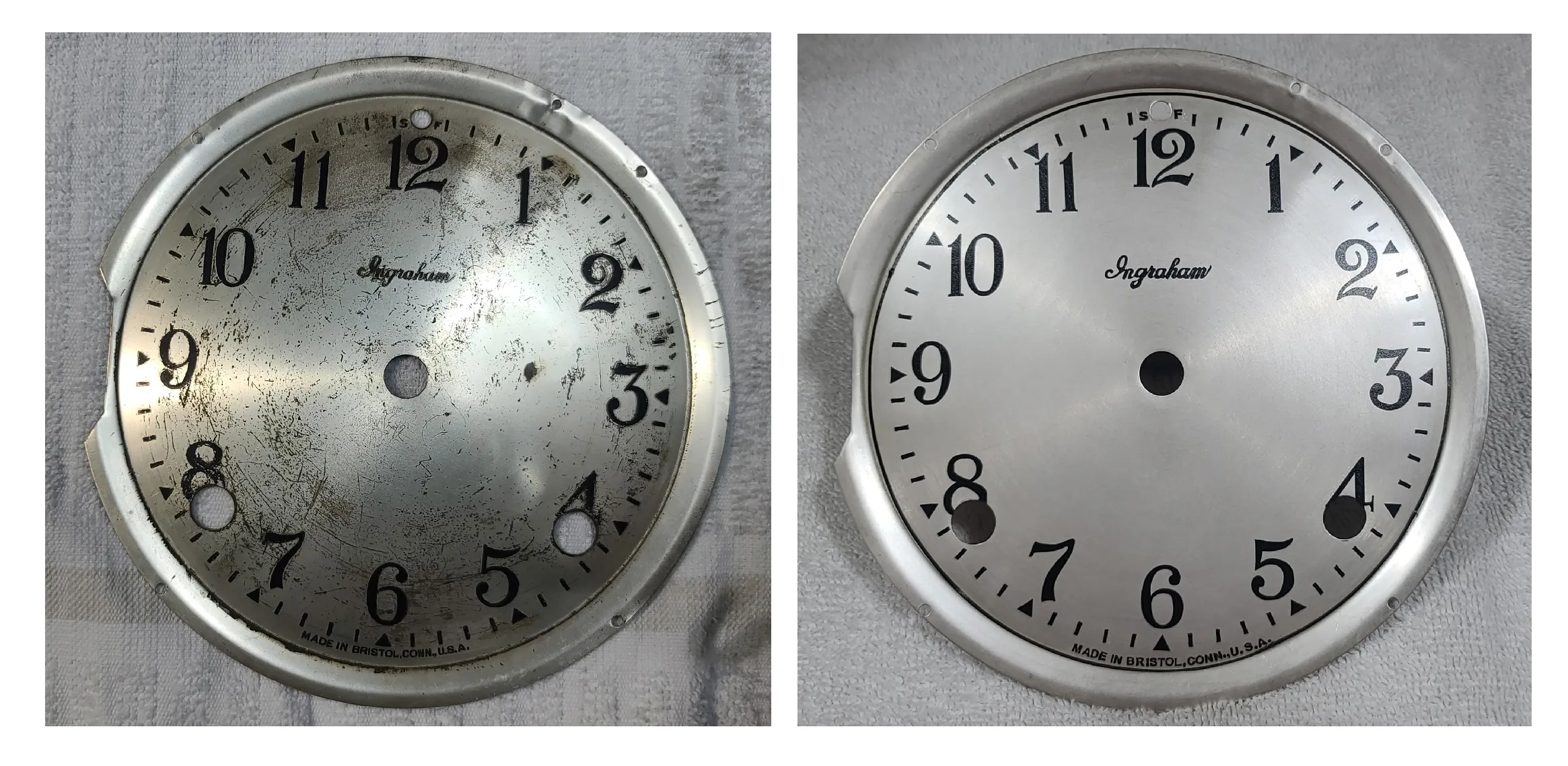
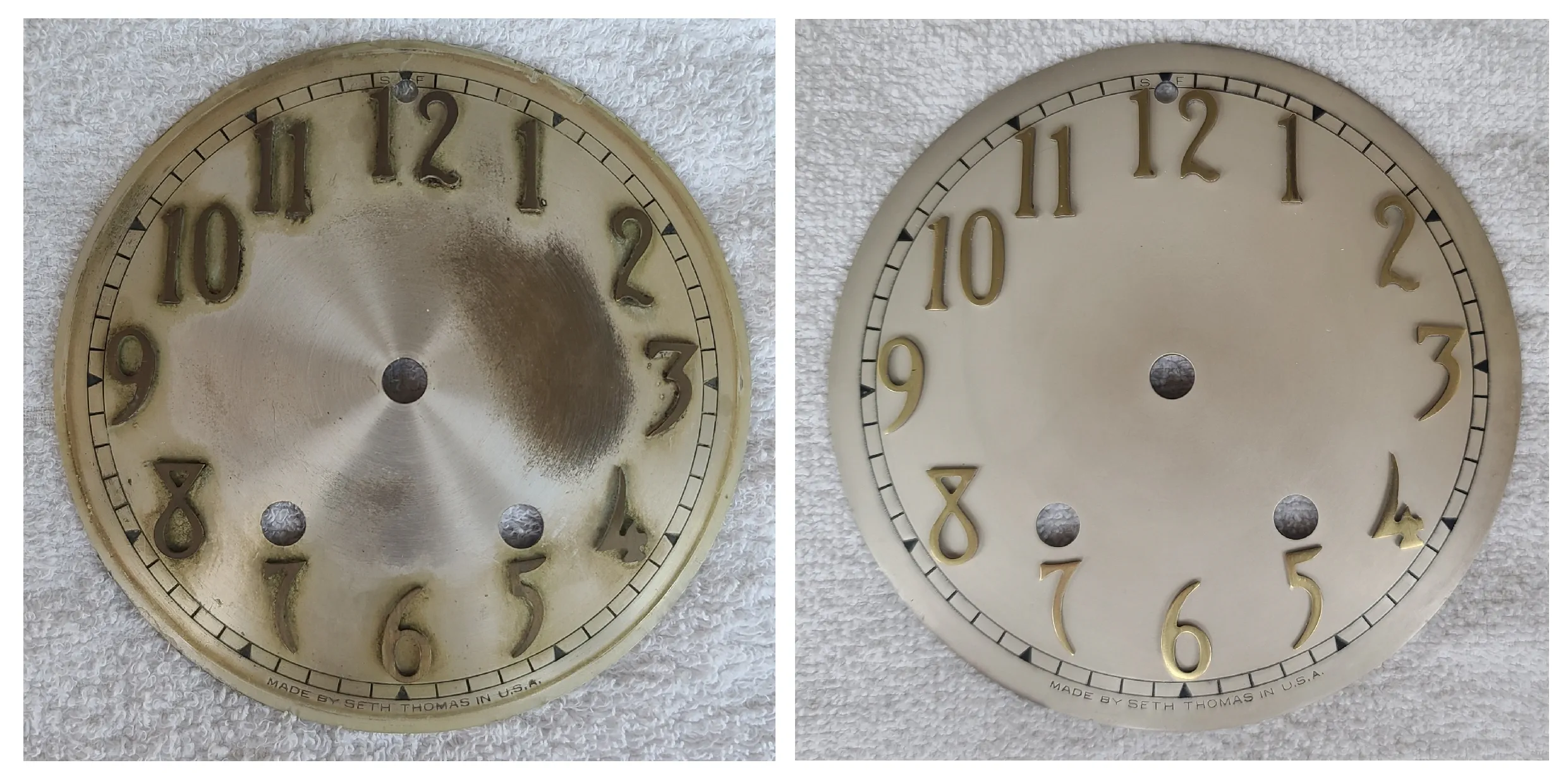
Dial restoration is not to be taken lightly, as tasteful patina should be left untouched. But, like a vintage car body pitted with rust, a simple wax job over failing paint won't hide the need for deeper work to be done. Together, we will evaluate the condition of your clock dial and decide whether to preserve its existing patina, or bring the finish back to a pleasing as-new standard. The photos below show the dramatic effect of vintage clock dials "before and after."
Dial Restoration has become a bit of a lost art. There are four general categories:
Paper dials: These are easily reproduced on a simple computer printer to exacting standards with the help of AI
Painted dials: White paint is applied over metal and the numerals, chapter ring and ornamentation are painted by hand or stenciled.
Enamel dials: "Enamel" in this case is not paint; it was a process much like porcelain where tiny glass pieces are heated into a mold. The numerals, chapter ring and ornamentation were painted on.
Silvered dials: This is a technique involving silvering powder, cream of tarter, baking soda, lots of polishing and tedious effort in re-applying numerals and chapter ring with paint or engraver's wax.